



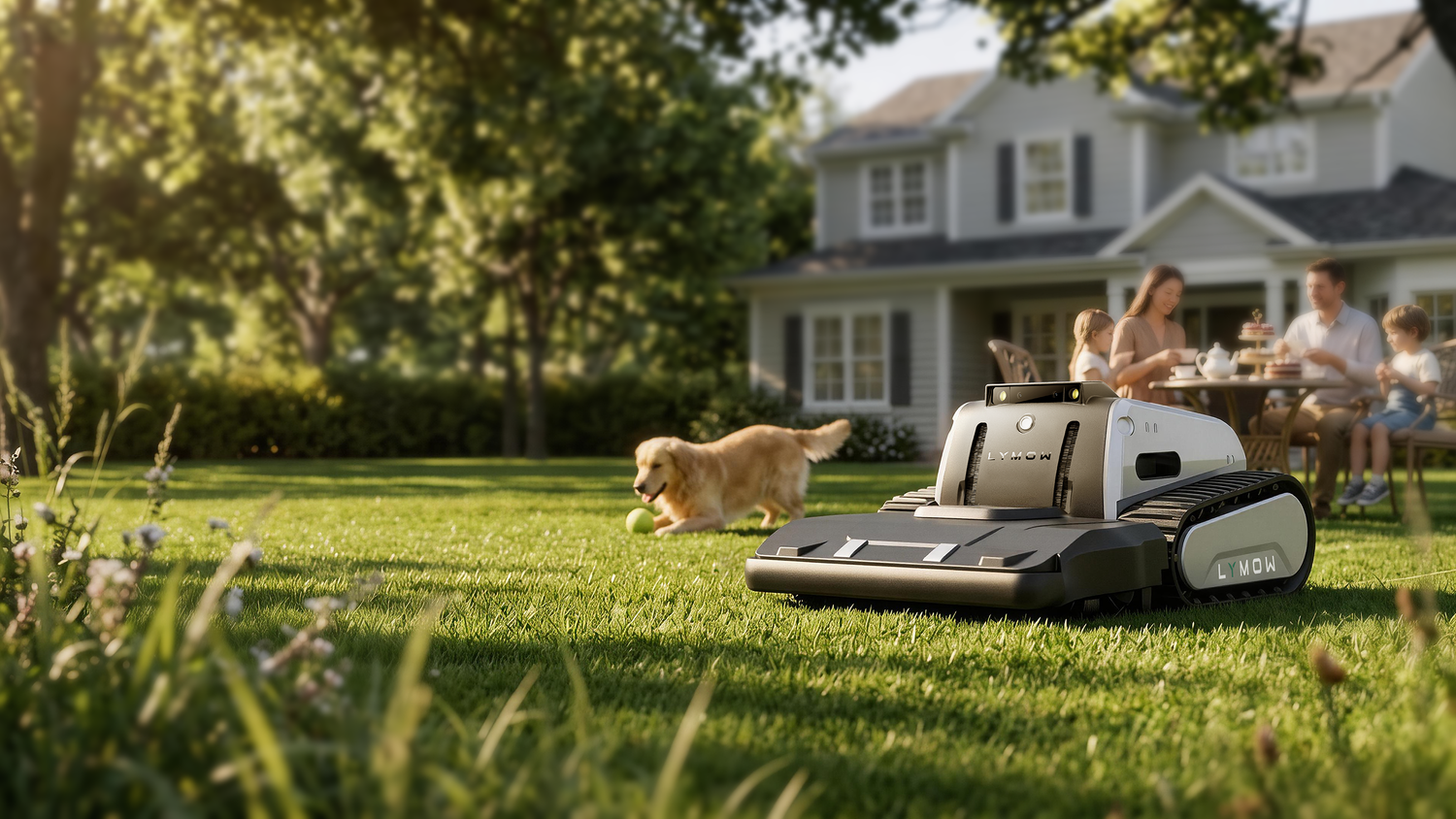
Premium robot mowers ranging from $2,500 to $5,900 justify their cost for properties exceeding 0.75 acres with challenging terrain, complex landscaping, or slopes above 20 degrees. High-end models like the Lymow One Plus at $2,499 deliver wire-free RTK navigation, extreme slope handling up to 45 degrees, and powerful dual-blade systems that eliminate the 25+ hours annually spent on traditional mowing.
For homeowners managing flat, simple lawns under half an acre, mid-range alternatives at $1,000-$2,000 provide 90% of the benefits without premium pricing. The decision hinges on matching your terrain challenges, lawn size, and time value to the right feature set.
Understanding the Robotic Lawn Mower Price Tiers in 2026
When researching the market to find the best robotic mower to buy, you must first understand the distinct price segments that serve specific property types and user needs.
Budget models ($600-$1,000) handle basic flat lawns with boundary wire installation, while mid-range options ($1,000-$2,500) introduce app control and improved navigation. The premium tier ($2,500-$5,900) represents a significant leap in capability.
Premium models distinguish themselves through three core advantages: wire-free setup using RTK-GNSS positioning, extreme terrain handling with tracked or all-wheel drive systems, and AI-powered obstacle detection. The Lymow One Plus exemplifies this tier at $2,499, featuring tank treads that conquer 45-degree slopes, a 16-inch cutting deck with 1200W peak power, and RTK-VSLAM integrated navigation that eliminates the 2-4 hour boundary wire installation process.
Critical Features That Define the Best Robotic Lawn Mower
Wire-Free RTK Navigation Eliminates Setup Hassles
Traditional boundary wire systems require 2-4 hours of installation and create ongoing maintenance concerns when wires break. A truly best robotic lawn mower uses wire-free systems like RTK-GNSS technology to achieve centimeter-accurate positioning without physical boundaries.
Lymow One Plus utilizes RTK-VSLAM integrated navigation, allowing users to map their property through the app. This system supports up to 80 zones across 15 acres. When you add a new garden bed, wire-based systems require physical reinstallation; RTK navigation systems adjust virtually through the app, saving hours of annual maintenance. This flexibility alone justifies the premium over wire-dependent alternatives.
Extreme Slope Capability Protects Hillside Properties
Standard two-wheel-drive robot mowers struggle on slopes above 15 degrees, often slipping or requiring manual intervention. If you have a hilly yard, you need performance on par with a commercial robotic lawn mower.
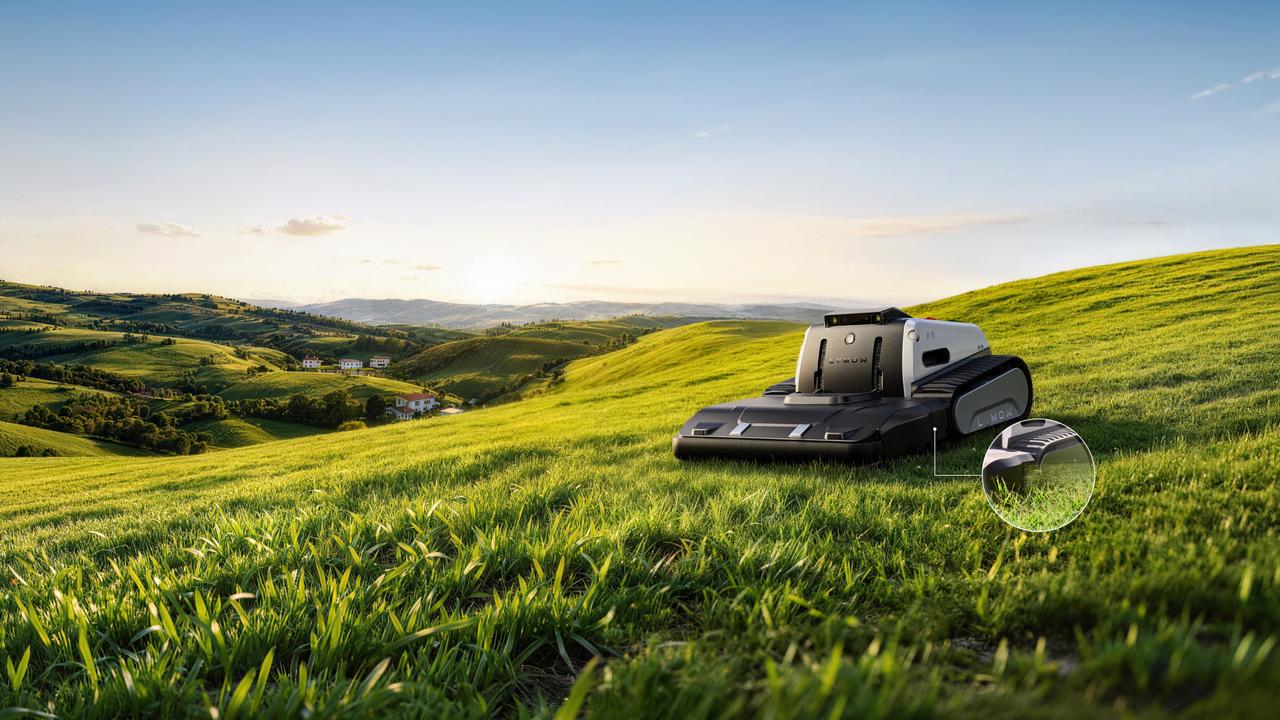
The Lymow One Plus handles slopes up to 100% gradient (45 degrees) using continuous tank treads rather than wheels, distributing weight across the entire track surface for maximum grip. For properties with steep embankments or terraced landscaping, this capability justifies premium pricing by preventing the need for dangerous manual trimming on inclines.
Advanced Obstacle Detection Reduces Manual Intervention
Premium models incorporate multiple sensor systems—cameras, ultrasonic sensors, and AI processing—to identify and avoid obstacles without human assistance. The Lymow One Plus uses visual semantics and 3D recovery technology to navigate around trees and lawn furniture.
The practical impact is clear: fewer interruptions requiring you to rescue a stuck mower, and true autonomous operation that delivers the time savings premium pricing promises.
Are Robotic Lawn Mowers Worth It? A Total Cost of Ownership Analysis
Yes, high-end robot mowers deliver genuine ROI when calculating five-year costs including purchase price, consumables, energy, and time value.
| Cost Category | Traditional Mower | Mid-Range Robot | Lymow One Plus |
| Initial Purchase | $3,000 (zero-turn) | $1,500 | $2,499 |
| Fuel/Electricity (5yr) | $2,400 (gas) | $120 | $100 |
| Maintenance (5yr) | $800 (oil, filters) | $300 (blades) | $400 (blades, battery) |
| Setup Time | 2 hours | 4 hours (wire) | 0.3 hours (app) |
| Annual Mowing Time | 52 hours | 10 hours (monitoring) | 3 hours (monitoring) |
| 5-Year Time Investment | 260 hours | 50 hours | 15 hours |
| Total 5-Year Cost | $6,200 + 260 hours | $1,920 + 50 hours | $2,999 + 15 hours |
When you value your time at $25/hour, the calculation shifts dramatically. The Lymow One Plus saves 245 hours compared to traditional mowing ($6,125 time value), while delivering superior lawn health. So, are robotic lawn mowers worth it? For properties where terrain complexity requires manual trimming or extensive time, the breakeven point occurs at approximately 2-3 years, or 4-5 years for simpler properties where the primary benefit is time savings and convenience.
When Premium Features Justify the Investment
Buy Premium Models Like Lymow One Plus If:
Your property exceeds 0.75 acres with varied terrain: Large lawns benefit from the 528Wh battery capacity that covers 0.56 acres per charge and a 16-inch cutting deck.
Slopes exceed 20 degrees: Properties with hillside sections require the traction that only tracked systems provide. The Lymow One Plus 45-degree rating ensures reliable operation where alternatives fail.
Complex landscaping includes multiple obstacles: Gardens with numerous flower beds or trees benefit from AI obstacle detection that navigates autonomously.
Wire-free installation is essential: Properties where trenching for boundary wire would cause damage benefit immediately from RTK navigation.
You value your time: If your personal time value exceeds $20/hour, the 245-hour five-year savings justifies premium pricing purely from an economic perspective.
FAQ
Q: How long does it take for a premium robot mower to pay for itself?
A: For properties where you currently spend 1 hour weekly on mowing, a premium model like the Lymow One Plus achieves payback in 3-4 years when valuing your time at $25/hour. This calculation includes the $2,499 purchase price offset by eliminated fuel costs and reduced maintenance.
Q: Do wire-free RTK navigation systems work reliably in all weather conditions?
A: RTK-GNSS systems maintain centimetre-accurate positioning in most conditions. While heavy tree canopy may reduce GPS signal quality, the integrated VSLAM provides backup navigation using camera-based positioning.
Q: How much maintenance do premium robot mowers require annually?
A: Premium models require minimal hands-on maintenance—primarily blade replacement every 2-3 months and occasional cleaning. The Lymow One Plus uses durable SK5 High-Carbon Steel blades and brushless motors that eliminate the oil changes required by traditional mowers. Most owners spend only 10-15 hours annually on maintenance.
Ready to Upgrade Your Lawn Care?
If your property features challenging slopes, complex landscaping, or exceeds 0.75 acres, high-end robot mowers deliver measurable ROI through time savings and reduced manual intervention. The Lymow One Plus combines extreme terrain capability, wire-free convenience, and competitive pricing at $2,499 to serve demanding properties without the $3,500-$5,900 premium of traditional high-end brands.
Explore detailed specifications and slope capability demonstrations at lymow.com to determine if premium features match your property’s specific requirements. The investment in advanced robotic mowing technology pays dividends in reclaimed time, improved lawn appearance, and the elimination of the physical demands of traditional maintenance.


Leave a comment
This site is protected by hCaptcha and the hCaptcha Privacy Policy and Terms of Service apply.